THEOS
The result that started this:
Ask any AI: “What is the difference between egotism and arrogance?”
| Method | Answer |
|---|---|
| Single-pass LLM | “Egotism is internal, arrogance is external — a spectrum.” |
| THEOS | “They are orthogonal failures on different dimensions. Egotism distorts self-perception. Arrogance distorts other-perception. You can have one without the other — a self-deprecating bully, or a narcissist who is outwardly polite.” |
The first answer is a line. The second is a 2×2 matrix. It explains something the first cannot: why a humble person can still be contemptuous of others.
This difference — the discovery of structure that a single reasoning pass misses — is what THEOS is built to produce.
What THEOS Is
THEOS is a dual-engine dialectical reasoning framework written in pure Python (3.10+, zero external dependencies). It structures AI reasoning as a wringer: two opposed engines press against each other until their contradiction shrinks to a provable minimum — or halts at irreducible disagreement.
          INDUCTION
       ↗            ↘
 (observation)    (pattern)
     ↑                ↓
┌─────────────────────────────┐
│  LEFT ENGINE (constructive) │ → D_L
│  private self-reflection    │
│  pass 1 → pass 2            │
└─────────────────────────────┘
              ↓ WRINGER ↓
┌─────────────────────────────┐
│ RIGHT ENGINE (adversarial)  │ → D_R
│  private self-reflection    │
│  pass 1 → pass 2            │
└─────────────────────────────┘
     ↓                ↑
  GOVERNOR        WISDOM
(halts when Φ < ε) (accumulates)
The loop (I→A→D→I):
- Induction — extract patterns from the question
- Abduction — each engine proposes its strongest hypothesis (constructive vs. adversarial)
- Deduction — each engine derives conclusions from its own hypothesis
- Measurement — the governor measures contradiction Φ; decides to continue or halt
The Key Research Finding
When THEOS was evaluated against standard AI evaluation rubrics (accuracy, depth, utility, coherence, coverage), it scored significantly lower than single-pass answers. Effect size: Cohen’s d = −3.46 (large).
This is not a failure. It is evidence of novelty.
Standard metrics reward confident completeness. THEOS produces dialectical tension, hidden-structure discovery, and productive disagreement. Judging THEOS with a standard rubric is like judging colors in the rainbow for the way they taste.
→ Read: Why Normal Metric Judgment Cannot Determine the Value of THEOS
Comparative Evidence
In a 10-question study against ChatGPT, Perplexity, Gemini, Copilot, and Grok:
| Question | What others said | What THEOS found |
|---|---|---|
| Courage vs recklessness | Courage weighs cost, accepts fear | Fearlessness is not the goal — it is a deficit. The absence of fear cannot be courageous by definition. |
| Efficiency vs effectiveness | Efficiency = doing things right; effectiveness = doing right things | Organizations optimized for efficiency become structurally incapable of recognizing effectiveness failures — the metric crowds out the goal. |
| Trust — why slow to build, fast to destroy | Asymmetry of effort | Trust is not symmetrical in kind, only in name. Building creates a different psychological object than what destruction eliminates. |
→ Read: Full Comparative Study
Quick Start
git clone https://github.com/Frederick-Stalnecker/THEOS.git
cd THEOS
pip install -e ".[dev]"
python code/theos_system.py
Or open in GitHub Codespaces — no installation required.
Watch: What is THEOS and Why Does It Exist

→ The Vision
Where THEOS is going: THEOS Certification, medicine, constitutional AI, and the global wisdom network. This is the most important page on this site.
Navigation
| → The Vision | THEOS Certification · Medicine · Constitutional AI · Global wisdom network |
| Architecture | The wringer · The governor · Brain hemisphere model · The formal math |
| Current Status | What is proven · What is not yet tested · What was corrected |
| Research | Why standard metrics fail · Comparative studies · Experiment design |
| The Experiment | Insight Detection Rubric · How to contribute results |
| API Reference | TheosCore · TheosConfig · TheosOutput · LLM adapters |
| Developer Guide | Build a THEOS domain · Operator contract · Self-reflection |
| Integration Guide | Claude · GPT-4 · MCP server · Token costs |
| Troubleshooting | Common issues · CI · Evaluation pitfalls |
| GitHub | Code · Tests · Contributing |
| YouTube | Video explanations · Demonstrations · The vision |
Author
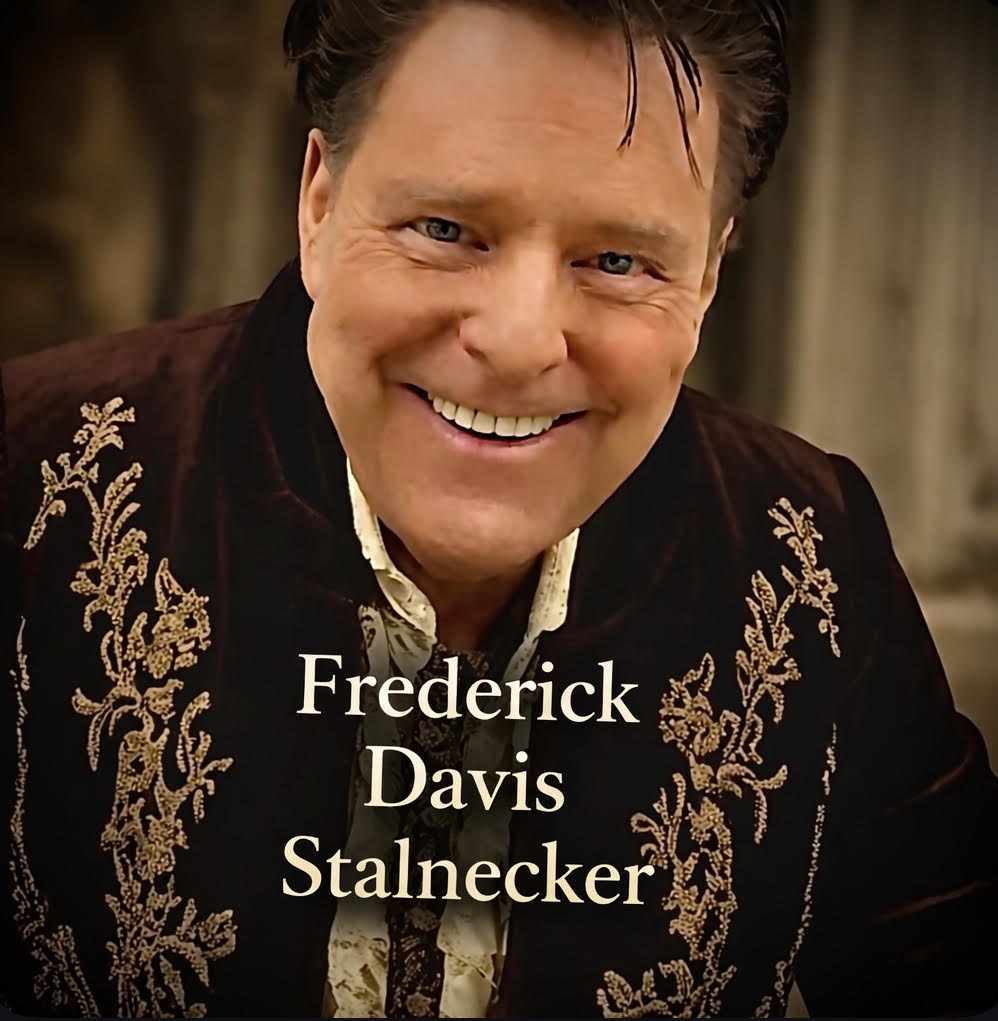
Frederick Davis Stalnecker Serial inventor — 61 years, 73 inventions · Patent pending: USPTO #63/831,738
Built with Celeste (Claude Sonnet 4.6) as research assistant.
From truth we build more truth.
MIT License · 2026